Our programs

Two tracks. One mission.

Hands-on STEM experiences designed for grades 3–6. Small cohorts, proven curriculum, real outcomes.

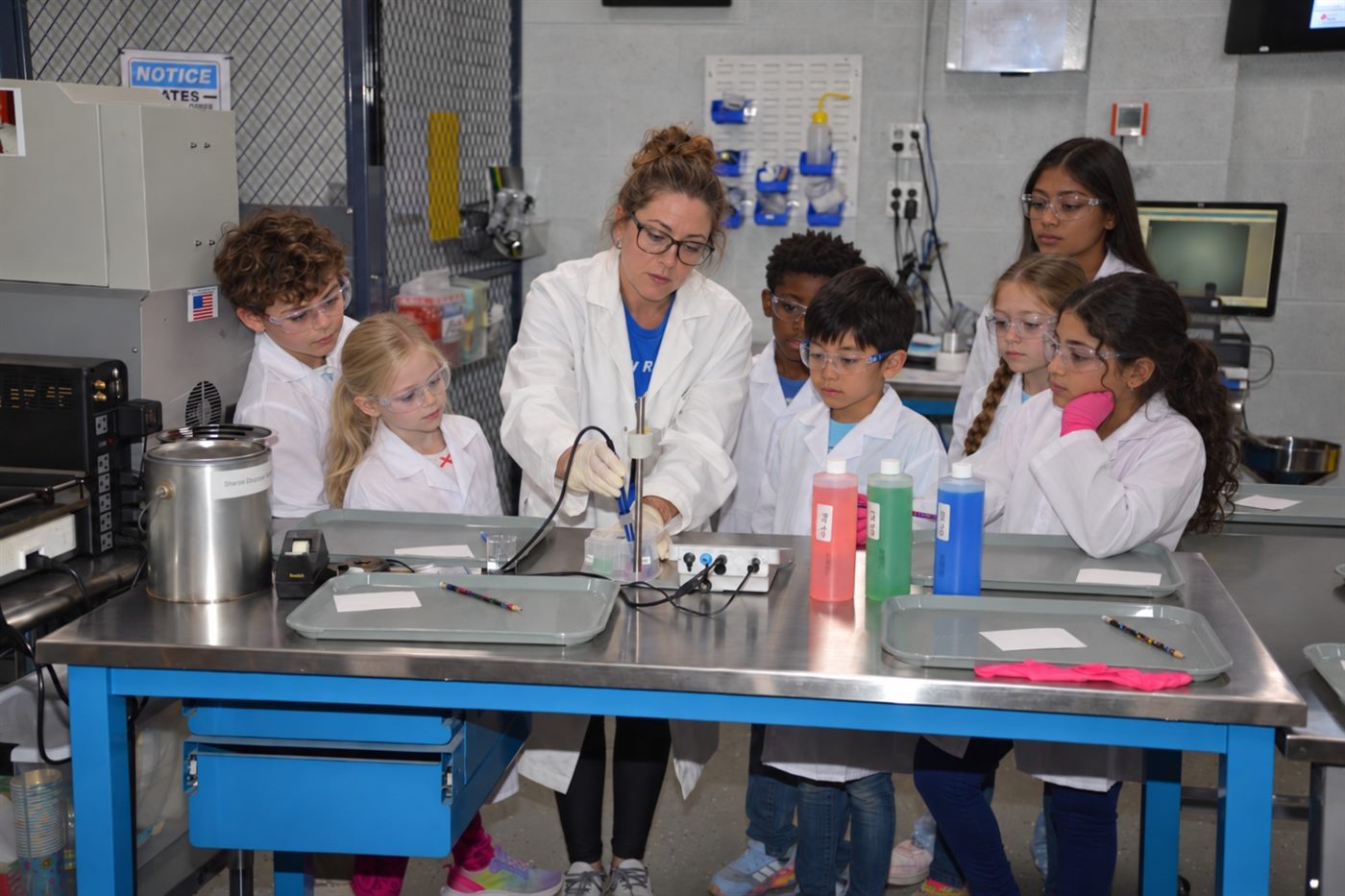
Instructor demonstrating a pH experiment to MiLab students

Power of Hydrogen

Students explore the chemistry of pH using everyday materials — fruit juice, water, and pH test strips. No caustic chemicals, no complex equipment. Just real science that builds genuine understanding and lab confidence.

The curriculum covers the pH scale, acid/base chemistry, experimental design, data recording, and lab safety — skills that transfer to every science class they'll ever take.

  • 8 weekly sessions, 1 hour each
  • Grades 3–6, max 6 students
  • All consumables provided (pH strips, juice, cups)
  • Lab coat included with level badge system
  • Covers lab safety and best practices
  • Curriculum built and piloted by MiLab founders
Share your interest Try the virtual lab → Learn more →
🖥️

Intro to CAD (Onshape) ✦ Coming soon

Our engineering track is in development and launching after Power of Hydrogen. Students will learn computer-aided design using Onshape — the same browser-based CAD software used by professional engineers — and walk out with a 3D-printed model of something they designed from scratch.

The curriculum follows PTC's proven Onshape education material, adapted for the MiLab format. No experience required — just curiosity and a willingness to build things. Join the waitlist and you'll be first to hear when dates are set.

  • 8 weekly sessions, 1 hour each
  • Grades 3–6, max 6 students
  • Chromebook provided — no device needed
  • Free Onshape education software
  • Cornerstone outcome: a 3D print of your own design
  • Curriculum by PTC, adapted by MiLab
Join the CAD waitlist Preview the CAD lab →

Earn your way up.

Each level is a real milestone, not just a participation ribbon. Badges are earned, not given.

1Explorer

Curiosity and basic scientific habits — safety rules, how to observe, how to record data, and how to ask good questions.

  • Completes simple experiments start to finish
  • Demonstrates safe lab behavior consistently
  • Records observations and asks follow-up questions
2Investigator

Hands-on experimentation — forming hypotheses, using measurement tools, and following multi-step procedures.

  • Designs a simple test with a clear hypothesis
  • Uses equipment correctly and independently
  • Works effectively in pairs on shared experiments
3Analyst

Understanding results — interpreting data, comparing outcomes, troubleshooting, and communicating findings clearly.

  • Creates charts and graphs from experimental data
  • Explains sources of error in their experiments
  • Proposes improvements to an existing experiment
4Innovator

Creativity and engineering — building prototypes, solving open-ended challenges, and combining concepts into original solutions.

  • Completes a design challenge with a working prototype
  • Iterates on a design based on test results
  • Combines concepts across experiments to solve new problems
5Researcher

Independent inquiry — planning and running a small project, gathering data over time, and presenting the work.

  • Leads a team task from planning to presentation
  • Documents a multi-session experiment with full notes
  • Presents findings clearly to peers and instructors
6Mentor Scientist

Leadership and mastery — helping younger groups, running demos, and assisting instructors. Teaching is the highest form of understanding.

  • Teaches a concept to a younger or newer student
  • Runs a demonstration for the group independently
  • Guides a team through a full challenge start to finish

Interested in a future cohort?

We're keeping cohorts small at just 6 students. Share your interest and we'll reach out within 48 hours.

Share your interest